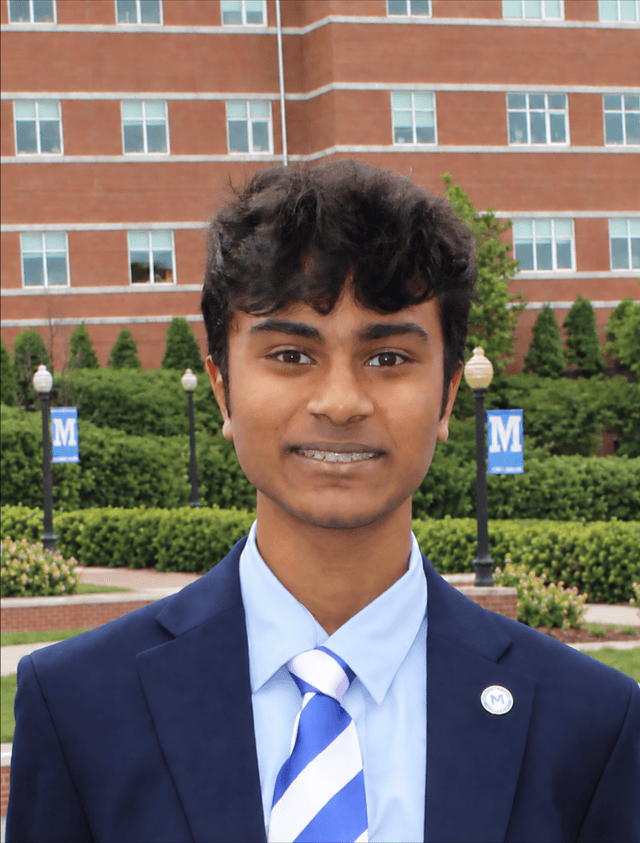


Nishanth Basava

Nishanth Basava

I build ML systems and work on AI safety research

Notes on things I'm learning

  1. 2026 –
    Frizzle logo
    I’m a software engineering intern at Frizzle (YC S25), working on an LLM pipeline that grades student worksheets. I built the eval loop and raised agreement with human graders from 83% to 91% on new subjects.
  2. 2026 –
    Neurdy Lab logo
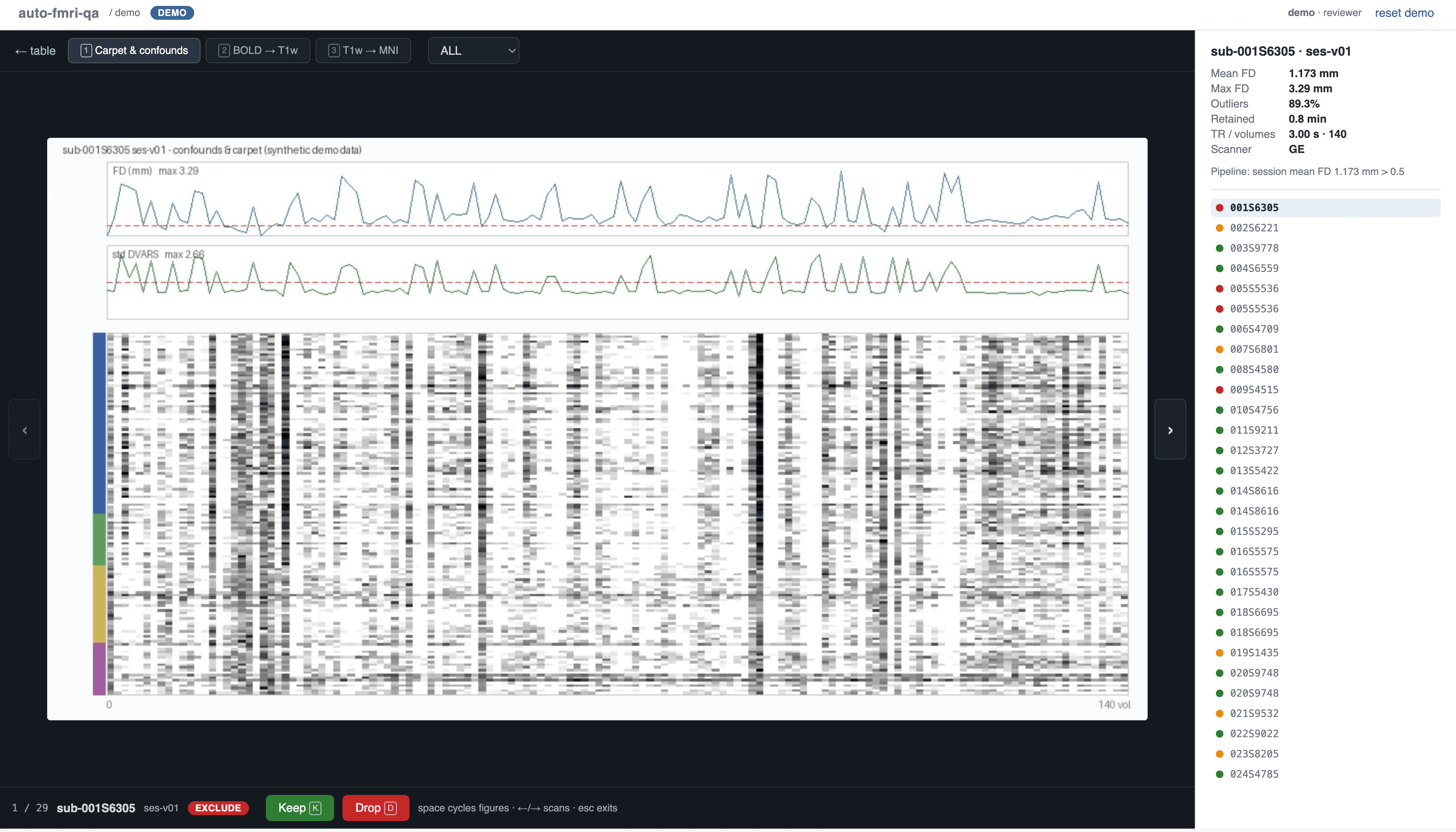
    I do ML research at the Neurdy Lab at Vanderbilt, where I built AutoQA, a fine-tuned vision-language model that reviews fMRI scans for quality problems.
  3. 2026 –
    DiffEx logo
    I co-founded DiffEx, a differential-diagnosis tool for clinicians. We won the Vanderbilt Hult Prize and piloted it with emergency physicians in Guatemala.
  4. 2025 –
    Vanderbilt University logo
    I study computer science and applied math at Vanderbilt, with a minor in cognitive studies, as a Chancellor’s Scholar and U.S. Presidential Scholar. Outside class I was VP of Marketing for VandyHacks and built software for nonprofits with ChangePlusPlus.
  5. 2023 – 2025
    Harvard T.H. Chan School of Public Health logo
    I worked with Harvard Biostatistics and Dana-Farber on bayesNMF, a Bayesian method for finding mutational signatures in cancer genomes, published in the Journal of Computational and Graphical Statistics.

Projects

AutoQA review interface showing an fMRI carpet plot with motion metrics and keep/drop controls

AutoQA

I built AutoQA, a pipeline that reviews fMRI scans for quality problems. I curated an expert-labeled QC dataset (weighted Cohen’s κ = 0.92) and distilled a RAG-grounded Claude teacher into Qwen2.5-VL-7B with LoRA, improving held-out macro-F1 from 79.6% to 84.1% at a fraction of the inference cost. The code is on GitHub.
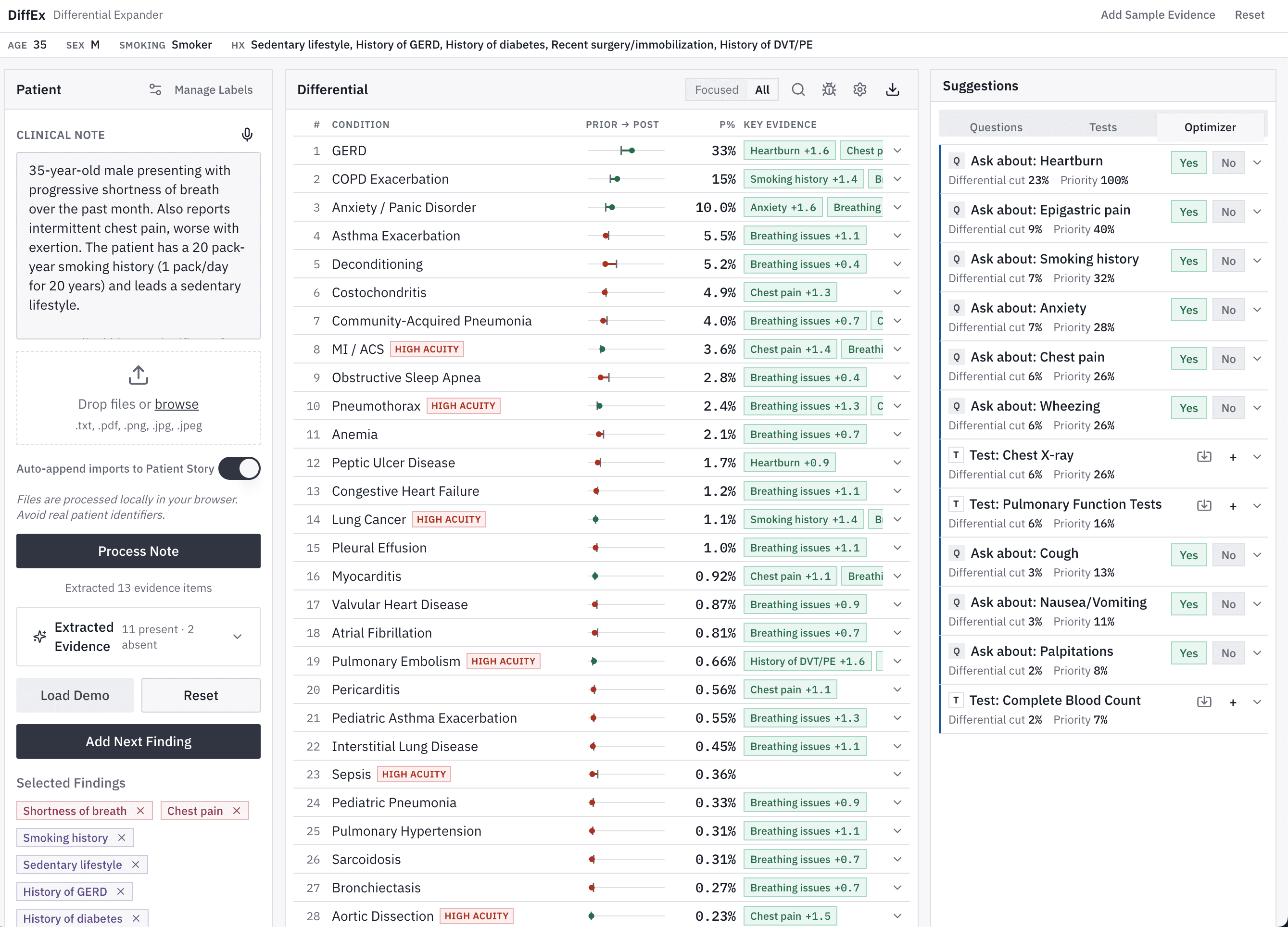
DiffEx interface ranking a differential diagnosis from a clinical note, with suggested questions and tests

DiffEx

I co-founded DiffEx, an explainable differential-diagnosis engine for clinicians built on a likelihood-ratio knowledge graph. It reaches 61% top-1 and 78% top-3 accuracy on published clinical vignettes, against 22% for a prevalence-only baseline. We won the Vanderbilt Hult Prize and piloted it with emergency physicians at a clinic in Guatemala. The code is on GitHub.

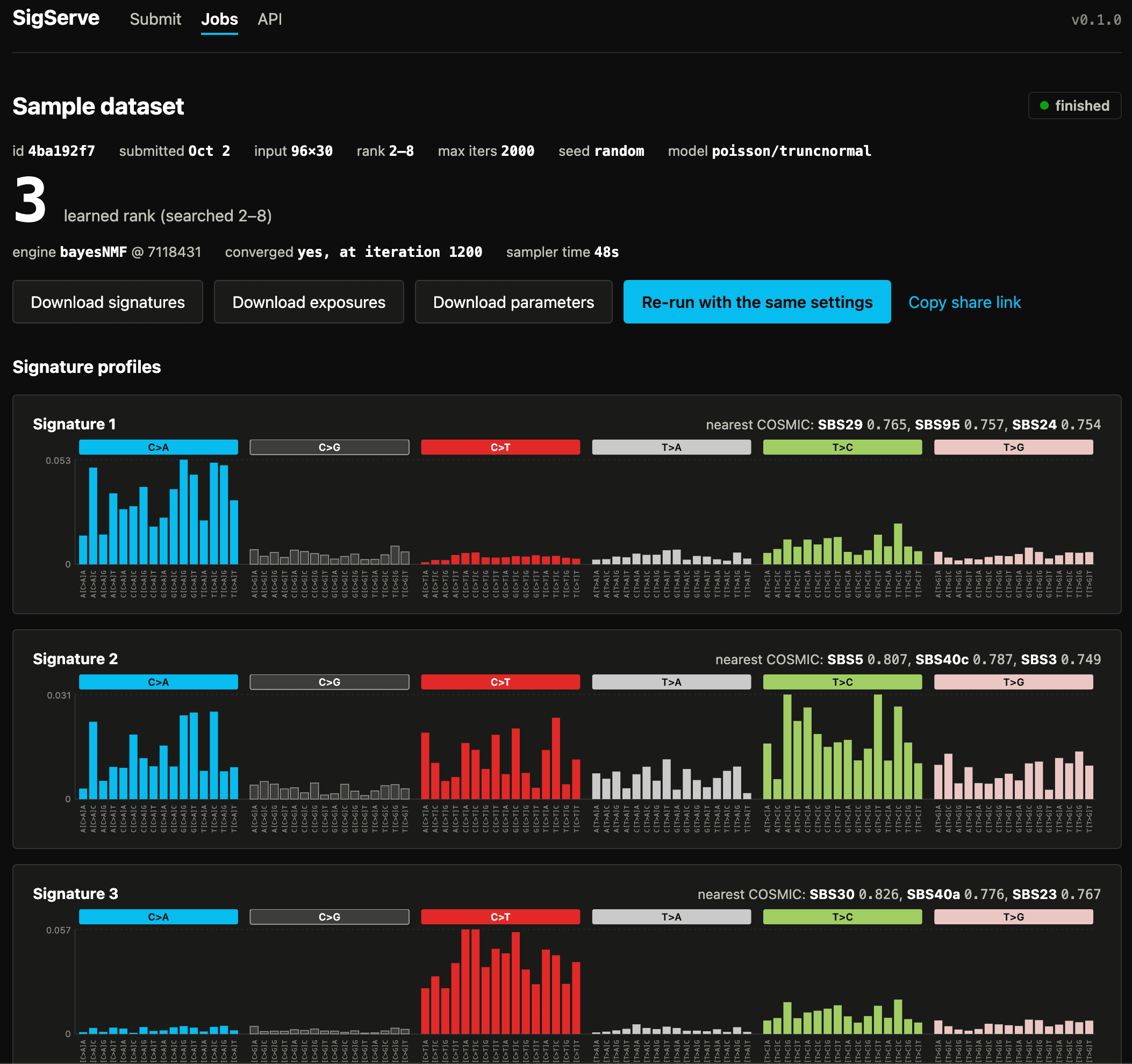
SigServe job results page showing learned mutational signature profiles with nearest COSMIC matches

SigServe

I built SigServe so researchers can run bayesNMF, our Bayesian mutational-signature method, without ever touching R: a FastAPI service with Redis-backed workers that accepts mutation-count matrices and runs signature discovery asynchronously. It’s Dockerized and deployed on AWS EC2, with a CI-gated test suite at 88% coverage. The code is on GitHub.

Publications

Jenna M. Landy, Nishanth Basava, Giovanni Parmigiani. “bayesNMF: Fast Bayesian Poisson NMF with Automatically Learned Rank Applied to Mutational Signatures.” Journal of Computational and Graphical Statistics, 2026.

I mostly work in Python, TypeScript, R, and C++, with PyTorch, FastAPI, PostgreSQL, Redis, Docker, and AWS.